
For anyone working in pharmacovigilance, regulatory affairs, or clinical development, this is the most consequential update in a generation.
Beyond the methodology, there's a bigger signal: the bar for how companies conduct and document BRA is being fundamentally raised.
What CIOMS WG XII actually says
The report's core argument is a shift from treating BRA as a regulatory exercise at submission time to embedding it as a proactive, lifecycle-long practice.
Five things stand out:
1. BRA starts in early development, not at submission
The report explicitly calls for integrating benefit-risk thinking into clinical trial design, conduct, and analysis from the beginning. The questions you ask in Phase I should already be shaped by how you'll weigh benefits against harms at the end of Phase III and beyond.
2. The BRAD becomes the spine of a product's lifecycle
CIOMS WG XII introduces the Benefit-Risk Assessment Document (BRAD): a living record updated at every major milestone from pre-clinical through post-approval. It feeds into and draws from regulatory submissions, PBRERs, Investigator Brochures, Risk Management Plans (RMPs), and CTD modules. Not a one-time deliverable. A continuously evolving record of how your benefit-risk understanding is developing.
3. Patient perspective is no longer optional
The report makes a strong case for including patient-centric endpoints alongside traditional efficacy and safety metrics. This isn't about optics, it's about generating more complete evidence of how a product actually performs in the people who use it. Patient preference studies, patient-reported outcomes (PROs), and quality-of-life data move from nice-to-have to structurally required.
4. Uncertainty is a first-class input
No more treating uncertainty as something to minimise in submissions. CIOMS WG XII asks teams to explicitly identify, document, and manage it across study design, enrolled populations, choice of comparator, data completeness, and statistical methods. Acknowledging uncertainty is now part of doing BRA well.
5. Quantitative methods: use them when they matter
The framework provides a decision tree: when benefits clearly outweigh risks (or vice versa), a structured qualitative assessment is sufficient. It's the marginal or uncertain cases where quantitative methods with fit-for-purpose data and sound methodology earn their place.

Why this matters now
The CIOMS WG XII report supersedes the Working Group IV framework, published in 1998. That's a 27-year replacement cycle and it means the existing baseline is being retired.
Companies still running BRA as a submission-time document assembly exercise will find themselves misaligned with where regulators, HTA bodies, and clinical standards are heading. Reporting standards like SPIRIT, CONSORT, and PRECIS are expected to evolve in response. Multidisciplinary teams will need to be structured around BRA from early development. And the BRAD will need to be woven into existing document management and regulatory workflows, not bolted on at the end.
What ArcaScience was built for
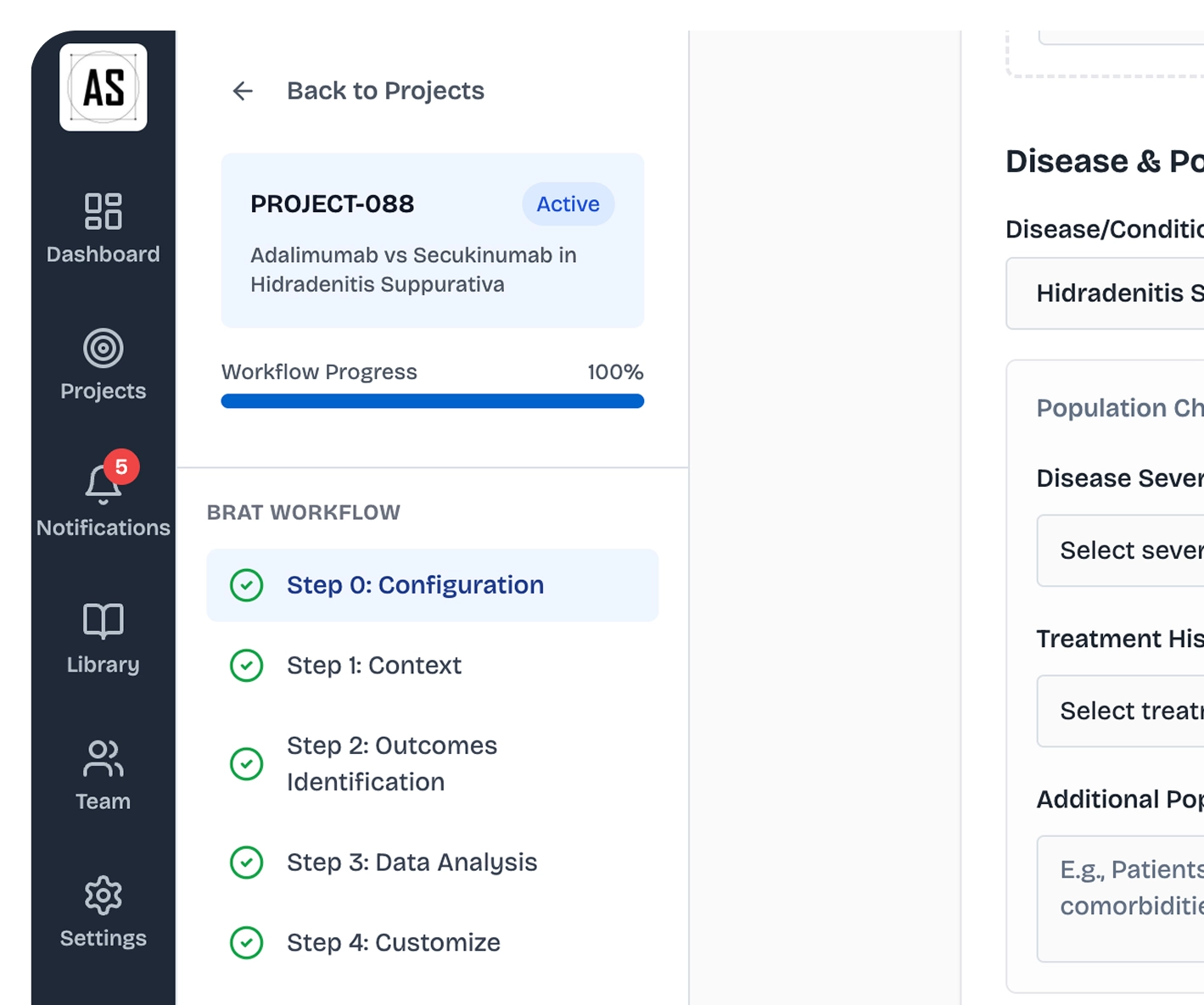
CIOMS WG XII describes a world where benefit-risk assessment is continuous, multidisciplinary, and deeply integrated with clinical and regulatory operations. That is an infrastructure challenge as much as a methodology one and it's the problem ArcaScience was designed to solve.
The platform structures benefit-risk evidence across the full product lifecycle, synthesises it in formats regulators and HTA bodies can act on, and maintains the traceability that makes every BRA conclusion defensible. ArcaScience makes that operationally feasible.
The bottom line
The CIOMS WG XII report isn't just guidance it's a signal of where the entire ecosystem is moving. Companies that treat BRA as a structured, continuous practice will be better positioned at every regulatory touchpoint, from submission to post-market surveillance.
If you're thinking about how to align your BRA processes with this new standard or want to see how ArcaScience approaches benefit-risk we'd be glad to talk.